

Torches
Torches have become an indispensable part of every household. We frequently encounter situations where we need to light something up at home. However, hikers and mountain lovers during various trips or camping should also have a quality torch in their backpack. You never know when darkness might catch you on a hike, and then a good source of light to illuminate the path comes in very handy. A torch can even serve as a signalling light in an emergency.
Technology advances and with it battery performance, so today's torches differ dramatically from their predecessors. They are smaller in size, lighter and thanks to LED technology they also shine better. Your choice of torch should be governed by what you will use it for. A simple torch is sufficient for home use, while for a mountaineer or climbing enthusiast, torches resistant to impacts are suitable. Other torches are suitable for armed forces such as police officers, soldiers or security services. Also pay attention to these parameters when choosing the right torch.
One mode or multiple brightness modes
When using a torch at home, one mode is usually sufficient. Some models offer multiple modes, from low to stronger. The battery life then depends on the brightness mode being used. You may even come across special modes such as a strobe or SOS function.
Torch power output
Torch power is measured in lumens. It measures the intensity of the light beam from the torch at the highest brightness setting and using new batteries. It is stated individually for different light modes. This parameter is an excellent tool for comparing torches with each other.
Type of torch beam
With torches you can encounter three types of light beam dispersion:
- fixed beam – a uniform wide beam of light, suitable for general use
- spot beam – a uniform beam of light, concentrated into the reflector and thus penetrating to a great distance
- adjustable – the width of the light beam can be adjusted from wide to a narrow focused beam
Torch durability
When choosing a torch, important parameters also include the size, weight, battery life and last but not least, resistance to impacts and water. Impact resistance is recommended when going climbing on rocks or anywhere where accidental dropping could render the torch non-functional and leave you without a source of light. Water resistance is measured using the IPX system. This parameter is important when using the torch in rain or near water. You may encounter resistance ratings of IPX-4, IPX-7 or IPX-8. The four rating denotes resistance to splashing water, IPX-7 resistance of the torch to temporary submersion at a depth of 1 m for 30 minutes, and IPX-8 submersion of the torch at the indicated depth for 4 hours.
Torches have become an indispensable part of every household. We frequently encounter situations where we need to light something up at home. However, hikers and mountain lovers during various trips or camping should also have a quality torch in their backpack. You never know when darkness might catch you on a hike, and then a good source of light to illuminate the path comes in very handy. A torch can even serve as a signalling light in an emergency.
Technology advances and with it battery performance, so today's torches differ dramatically from their predecessors. They are smaller in size, lighter and thanks to LED technology they also shine better. Your choice of torch should be governed by what you will use it for. A simple torch is sufficient for home use, while for a mountaineer or climbing enthusiast, torches resistant to impacts are suitable. Other torches are suitable for armed forces such as police officers, soldiers or security services. Also pay attention to these parameters when choosing the right torch.
One mode or multiple brightness modes
When using a torch at home, one mode is usually sufficient. Some models offer multiple modes, from low to stronger. The battery life then depends on the brightness mode being used. You may even come across special modes such as a strobe or SOS function.
Torch power output
Torch power is measured in lumens. It measures the intensity of the light beam from the torch at the highest brightness setting and using new batteries. It is stated individually for different light modes. This parameter is an excellent tool for comparing torches with each other.
Type of torch beam
With torches you can encounter three types of light beam dispersion:
- fixed beam – a uniform wide beam of light, suitable for general use
- spot beam – a uniform beam of light, concentrated into the reflector and thus penetrating to a great distance
- adjustable – the width of the light beam can be adjusted from wide to a narrow focused beam
Torch durability
When choosing a torch, important parameters also include the size, weight, battery life and last but not least, resistance to impacts and water. Impact resistance is recommended when going climbing on rocks or anywhere where accidental dropping could render the torch non-functional and leave you without a source of light. Water resistance is measured using the IPX system. This parameter is important when using the torch in rain or near water. You may encounter resistance ratings of IPX-4, IPX-7 or IPX-8. The four rating denotes resistance to splashing water, IPX-7 resistance of the torch to temporary submersion at a depth of 1 m for 30 minutes, and IPX-8 submersion of the torch at the indicated depth for 4 hours.


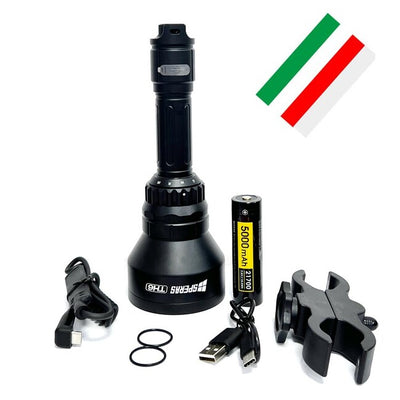


Speras Tactical LED Flashlight EST SE, Black
Choose your option


Choose your option

Choose your option


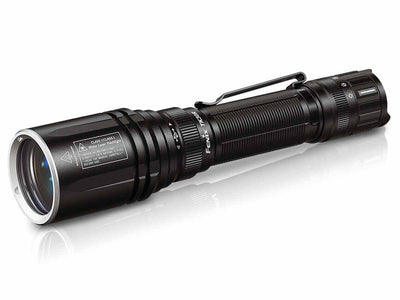
Fenix TK20R UE Tactical Rechargeable Flashlight, Green Tropic
Choose your option


Choose your option


Choose your option


Choose your option


Choose your option


Choose your option


NEXTORCH TA30D tactical LED flashlight 2200 lm
Choose your option


