

Hiking First Aid Kits
When hiking, doing outdoor activities, camping, fishing or otherwise spending time in nature, it is important to have first aid kits to hand. They should be a compulsory part of your kit and their contents should correspond to how long you plan to spend in the wild. Even on an ordinary mountain hike, unpleasant incidents such as minor injuries or blisters are waiting around every corner.
You should not underestimate the selection of a first aid kit, and should choose its size and contents according to where you are heading. For a regular hike, small first aid kits that can be clipped to a belt or backpack are sufficient. They are unobtrusive and you always have them with you. They contain the most important components that will allow you to provide first aid to yourself or your companions for minor and moderate injuries.
First aid kits should above all contain sterile gauze, plasters, a pressure bandage and regular bandage, scissors, adhesive tape, a triangular bandage, an isothermal foil, sterile gloves and disinfectant. The number of components naturally depends on how long you will be spending in nature. Pain medication, anti-diarrhoeal medication and any medicines you regularly take are also essential. When there are multiple participants in a hike, it is good to agree on the contents of the first aid kit — otherwise you may end up with some items duplicated and others missing.
Mil-Tec First Aid Kits
An excellent choice are the first aid kits from German manufacturer Mil-Tec with a waterproof case. They are ideal if you are heading fishing or on a longer camping trip and thanks to the waterproof casing they protect the contents from moisture. They are also suitable for storing your documents, electronic devices or mobile phones and are resistant to impact and breakage. First aid kits with a compartmentalised interior are excellent, as they allow you to quickly find what you need. The first aid kits are compact, take up little space in luggage and are lightweight.
When hiking, doing outdoor activities, camping, fishing or otherwise spending time in nature, it is important to have first aid kits to hand. They should be a compulsory part of your kit and their contents should correspond to how long you plan to spend in the wild. Even on an ordinary mountain hike, unpleasant incidents such as minor injuries or blisters are waiting around every corner.
You should not underestimate the selection of a first aid kit, and should choose its size and contents according to where you are heading. For a regular hike, small first aid kits that can be clipped to a belt or backpack are sufficient. They are unobtrusive and you always have them with you. They contain the most important components that will allow you to provide first aid to yourself or your companions for minor and moderate injuries.
First aid kits should above all contain sterile gauze, plasters, a pressure bandage and regular bandage, scissors, adhesive tape, a triangular bandage, an isothermal foil, sterile gloves and disinfectant. The number of components naturally depends on how long you will be spending in nature. Pain medication, anti-diarrhoeal medication and any medicines you regularly take are also essential. When there are multiple participants in a hike, it is good to agree on the contents of the first aid kit — otherwise you may end up with some items duplicated and others missing.
Mil-Tec First Aid Kits
An excellent choice are the first aid kits from German manufacturer Mil-Tec with a waterproof case. They are ideal if you are heading fishing or on a longer camping trip and thanks to the waterproof casing they protect the contents from moisture. They are also suitable for storing your documents, electronic devices or mobile phones and are resistant to impact and breakage. First aid kits with a compartmentalised interior are excellent, as they allow you to quickly find what you need. The first aid kits are compact, take up little space in luggage and are lightweight.
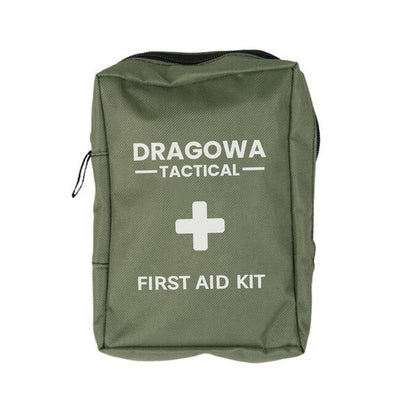


DRAGOWA Tactical First Aid Kit Pulse, Green
Choose your option


DRAGOWA Tactical First Aid Kit Compact, Red
Choose your option

DRAGOWA Tactical First Aid Kit Fjord, Red
Choose your option

DRAGOWA Tactical First Aid Kit Fjord, Black
Choose your option


Choose your option


Choose your option


Choose your option


Choose your option


Choose your option


Choose your option


Choose your option


Choose your option


Choose your option


Choose your option

Choose your option

Mil-Tec First Aid Kit with Equipment Small with Pouch Olive
Choose your option


Choose your option


Direct Action Horizontal MK II Medical Pouch, Cordura, Coyote Brown
Choose your option


Direct Action Horizontal MK II Medical Pouch, Cordura, Black
Choose your option


Helikon-Tex Competition Medical Pouch, Coyote
Choose your option


Helikon-Tex Insert Medical Pouch, Black
Choose your option

Choose your option


Helikon-Tex MICRO Medical Pouch, Nylon, Adaptive Green
Choose your option


Helikon-Tex MINI First Aid Pouch, Nylon, Shadow Grey
Choose your option


Helikon-Tex MICRO Medical Pouch, Nylon, Shadow Grey
Choose your option


Helikon-Tex MICRO First Aid Pouch, Nylon, Black
Choose your option


Helikon-Tex Micro First Aid Pouch, Red
Choose your option


Choose your option


Helikon-Tex MINI Medical Pouch - Nylon - Black
Choose your option


Choose your option


Helikon-Tex MICRO Medical Pouch, Nylon, Coyote
Choose your option


Helikon-Tex Universal First Aid Kit INSERT - Nylon - Red
Choose your option


Helikon-Tex COMPETITION Medical Pouch, Shadow Grey
Choose your option


Choose your option


Mil-Tec MOLLE Medical Pouch Large, Dark Coyote
Choose your option


